






Why Does Interlining Bond Poorly and Wrinkle After Pressing in Hot, Humid Weather?
Introduction
Poor interlining bonding and wrinkling after pressing in hot, humid weather are common problems in summer and the rainy season in garment production. Often, the issue is not simply that "the interlining does not stick," but rather a combined result of fabric moisture content, adhesive dot melting, shrinkage compatibility, and stress release after pressing.China shenghong interlining manufacturer
I. Why is interlining more prone to problems in hot, humid weather?
In high summer heat or the rainy season in southern China, many garment factories encounter similar problems: on shirt plackets, collars, cuffs, or the front panels of lightweight jackets and women's tops, the pressed areas may look fine immediately after pressing, but after sitting for a while they develop wrinkles, bubbling, or unevenness; some pieces, after wash testing, show reduced bond strength, and the edges may even come apart.
On the surface, these issues seem like poor interlining bonding, but in actual production, the cause is often not that simple. High humidity causes the fabric and interlining to absorb more moisture. During pressing, that moisture turns into steam, affecting the bond between the hot-melt adhesive and the fabric fibers. At the same time, the fabric in a damp, hot state is more prone to shrinkage, rebound, or deformation, ultimately manifesting as wrinkling and poor draping after pressing.
Therefore, interlining problems in hot, humid weather should not be viewed merely as "whether it sticks," but also "whether it remains stable after sticking."
II. Poor bonding may mean the adhesive dots have not truly wet out the fabric
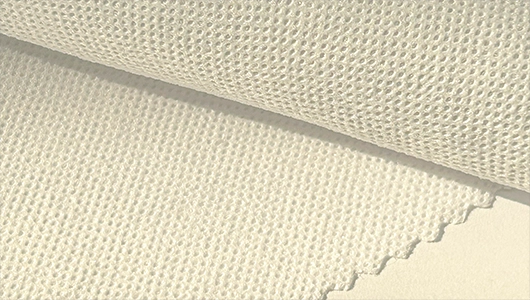
The essence of interlining bonding is that the hot-melt adhesive melts under the appropriate temperature, pressure, and time, and wets the fabric fibers to form mechanical anchoring. In humid weather, the fabric has a higher moisture content. During pressing, part of the heat is consumed by the moisture, so the actual temperature reaching the adhesive layer may be insufficient. On the surface, it may appear bonded, but the adhesive dots have not fully melted and wetted the fibers, leading to inadequate peel strength later.
This can be preliminarily assessed by the peel condition (lightly lifting the bonded area with a fingernail or tape). If, after gentle peeling, most of the adhesive dots remain intact on the interlining surface with little adhesion on the fabric, it usually indicates that the adhesive dots did not fully transfer or penetrate. The causes may be inadequate actual temperature, insufficient pressure, too short a time, or it may also be related to the fabric's finishing treatment.
Some fabrics with water-repellent, oil-repellent, coated, or heavily soft-finished surfaces naturally reduce the adhesive's ability to grip. In a high‑humidity environment, such fabrics are even more prone to "appearing bonded during pressing but weakening after cooling or washing." Therefore, when diagnosing poor bonding, you should not only look at the interlining's adhesive powder but also consider the fabric's surface condition.China interlining strength manufacturers
III. Wrinkling after pressing is not necessarily due to insufficient bond strength
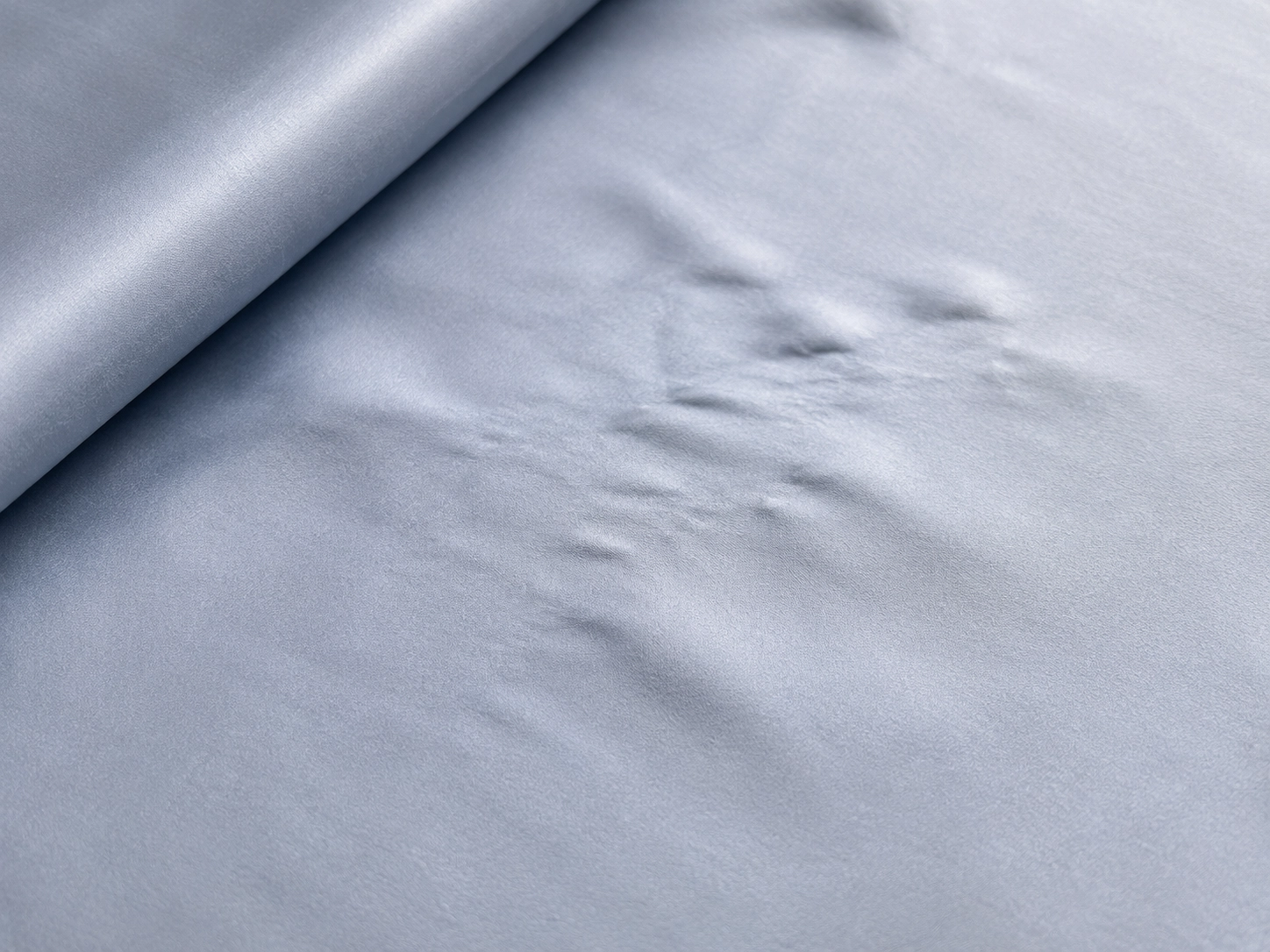
Many garment factories, when seeing wrinkling after pressing, directly assume the interlining has not bonded properly. But in practice, wrinkling is sometimes not a matter of "failure to stick" but rather inconsistent dimensional changes between the fabric and the interlining under damp, hot conditions.
For example, lightweight cotton, viscose, Tencel, linen blends, or loosely constructed summer fabrics have strong moisture absorption. During pressing, the fabric shrinks under heat, and during cooling, the fabric rebounds and releases stress. If the interlining has a small shrinkage rate while the fabric has a large shrinkage rate, once bonded together, they tend to form wavy marks, local wrinkles, or uneven surfaces.
Stretch fabrics also have similar problems. The fabric itself has stretch and recovery, while ordinary interlinings have little stretch. If the elasticity of the interlining and fabric does not match, a restraining effect can appear after pressing, manifesting as a twisted placket, an uneven collar surface, or wrinkled cuff edges.
Therefore, wrinkling after pressing needs to be distinguished: is it bubbling due to poor adhesive bonding, or is it a lack of drape due to differences in shrinkage, elasticity, or thickness between the fabric and interlining after bonding? Though similar on the surface, the solutions are different.
IV. Summary: In high‑humidity seasons, interlining problems should be diagnosed by the "bonding state"
In hot, humid weather, poor interlining bonding and wrinkling after pressing are rarely due to a single cause. Fabric moisture content, insufficient adhesive dot melting, surface finishes, shrinkage mismatch, and elasticity differences can all affect the final result.
For garment companies, the key is not simply to judge "whether the interlining is faulty," but first to distinguish whether the problem is "failure to stick" or "deformation after sticking." For the former, focus on adhesive dot melting and bonding conditions; for the latter, focus on shrinkage, elasticity, and hand‑feel matching between the fabric and the interlining.
Especially in summer, the rainy season, or high‑humidity workshop environments, interlining selection cannot be separated from the fabric's characteristics and pressing performance. By examining the peel condition, conducting sample comparisons, and observing post‑wash results, you can identify the source of the problem in advance, thereby reducing bubbling, wrinkling, delamination, and rework risks in bulk production.