








Outdoor Wind Blows into the Interlining Industry: How to Choose the Right Interlining for Waterproof Fabrics?
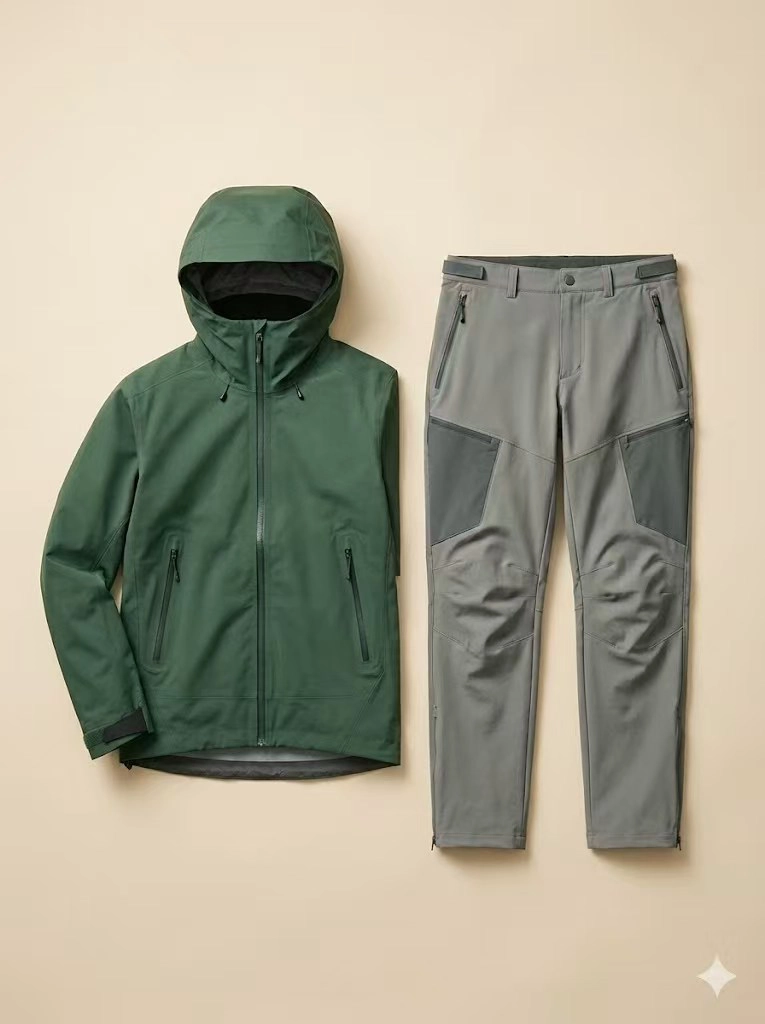
In recent years, market demand for outdoor functional apparel has continued to grow. Categories such as hardshell jackets, softshell jackets, and waterproof trench coats have expanded from professional outdoor fields to the mainstream ready-to-wear market, becoming a key focus in product development for an increasing number of apparel companies. With the wider application of waterproof fabrics, a technical issue in the ready-to-wear production process has become increasingly prominent: delamination and bubbling of interlinings after fusing.China shenghong interlining manufacturer
I. Why Are Waterproof Fabrics So Difficult to Bond?
The tendency of waterproof fabrics to delaminate is mainly due to two functional properties of the fabrics themselves, which conflict with traditional fusing processes:
1. The "Isolation Barrier" Problem
Most outdoor garments feature a durable water-repellent (DWR) finish on the surface. During interlining fusing, the waterproof coating acts like an "isolation net", preventing adhesive powder from penetrating into the gaps of fabric fibers. The adhesive can only stay on the fabric surface with severely insufficient grip. Once pulled by external force or washed, delamination and bubbling easily occur.
2. Contradiction Between "Heat-Sensitive Fabrics" and "High-Temperature Required Adhesives"
Hardshell jackets are usually laminated with TPU or PTFE waterproof and breathable membranes. Conventional interlining adhesive powder generally requires a high temperature of 140℃–150℃ to fully melt, but this temperature can cause shrinkage or even damage to the waterproof membrane, increasing fabric rejection rate. If the fusing temperature is lowered to 120℃ to protect the fabric, conventional adhesive powder cannot melt sufficiently, resulting in insufficient bonding strength.
II. How Does the Industry Solve the Delamination Problem Scientifically?
1. Adopt Specialized Adhesive Powder with High Compatibility
Since conventional adhesive powder is repelled by the waterproof coating, the technical solution is to use TPU (polyurethane) or PES (polyester)-based adhesive powder with similar material properties to waterproof and breathable membranes. Based on the principle that "similar materials bond better", such adhesive powder achieves stronger affinity with the waterproof coating on the fabric surface after melting, thus firmly adhering to it. This not only improves initial peel strength but also ensures no bubbling after garment washing.
2. Enable Medium-Low Temperature Fusing
The adhesive powder of specialized interlinings can fully melt and provide strong adhesion at 120℃–130℃ (medium-low temperature). This temperature range avoids the thermal damage threshold of waterproof membranes, ensuring both bonding strength and the preservation of the fabric’s functionality and appearance integrity.
3. Adopt Double-Dot Coating Process to Maintain Fabric Hand
Outdoor garments have high requirements for fabric lightness and air permeability. Simply increasing adhesive content to improve bonding strength will easily lead to adhesive strike-through, making the garment stiff. Therefore, specialized interlinings adopt a "double-dot coating" structure: the bottom adhesive layer locks the interlining base fabric and prevents adhesive strike-through; the top adhesive layer is responsible for bonding with the waterproof fabric. This structure not only ensures strong bonding force but also maintains the original hand of the fabric.China interlining strength manufacturers
III. Summary
Debonding of waterproof fabrics is essentially not a problem of process operation, but a problem of material compatibility.
Conventional interlinings are designed for ordinary fabrics and naturally fail to perform well when encountering the two "barriers" of DWR coating and waterproof membrane. The idea of outdoor-specialized interlinings is simple: use adhesive powder compatible with the coating to solve the repellency issue; lower the activation temperature to protect the heat-sensitive membrane; adopt the double-dot coating structure to control adhesive content and avoid stiffening the fabric hand.